
Flagship service
Locomotive traction motor repair
The traction motor is the component that turns energy into movement, and the first one to pay for a demanding operation. We repair it in full: we do not simply replace the part that failed, we return the motor to service condition with its state on record.
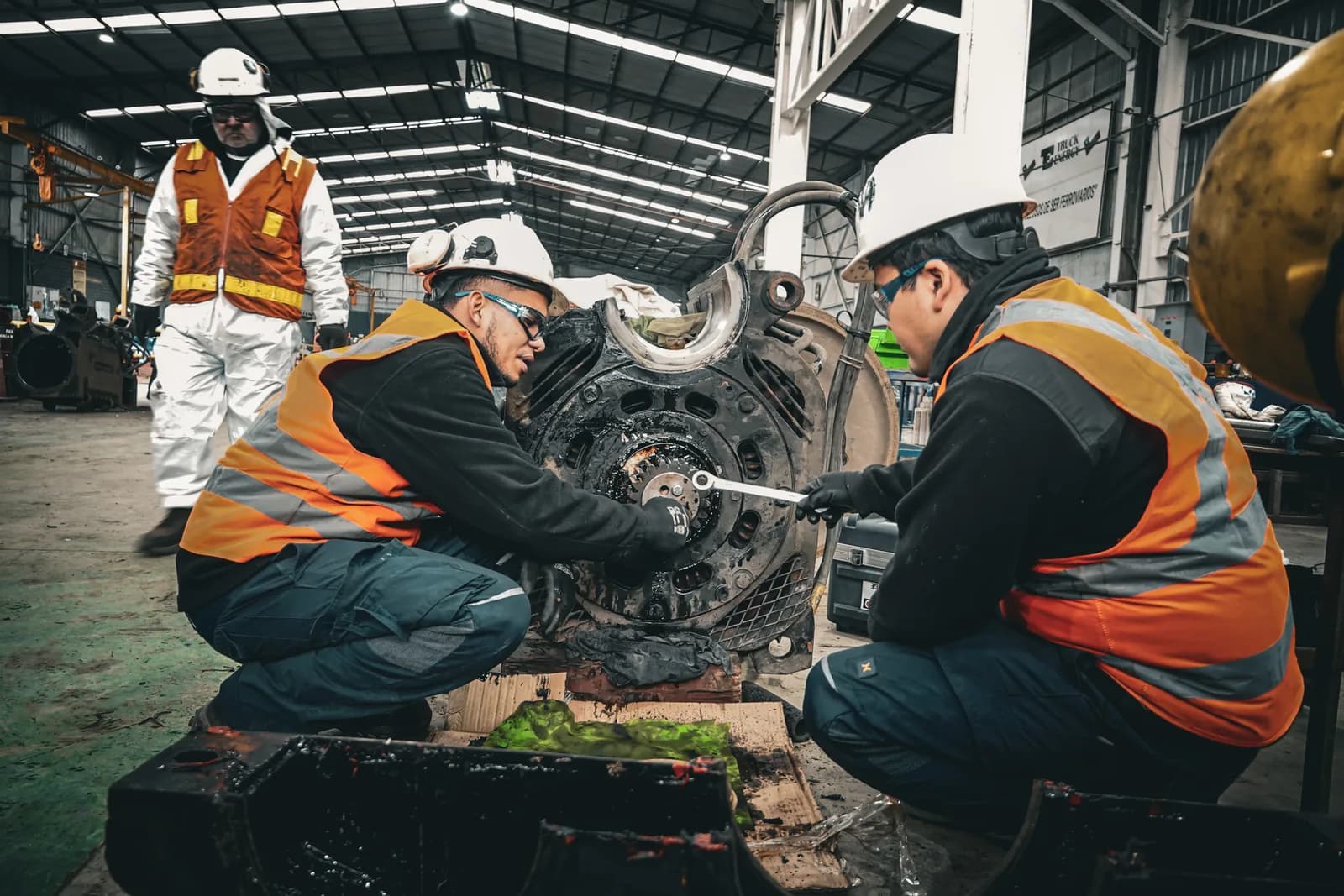
Traction motor repair with engineering judgment
Truck Energy was founded in 2010 for exactly this: to reliably repair the rotating electrical equipment of the locomotives that move the country's freight. More than 3,000 critical assets recovered stand behind the procedure we apply today.
A repair that only replaces what broke returns the motor to service, but it does not explain why it failed. We open every job with a diagnosis of the real condition and close it with tests that put on record how the motor came out. That traceability is what makes it possible to anticipate the next failure instead of waiting for it.
We work with rail, mining and port operations where a locomotive out of service costs tons per hour. The standard is not optional: ISO 9001 certification governs the process, and the team's more than 30 years of experience carries it out.
Scope
What the service includes
Intake and incoming diagnosis
We record the condition on arrival, review the asset's operating history and run the tests that establish the real scope of the repair before committing to any schedule.
Teardown and dimensional inspection
Controlled teardown and inspection of fields, armature, brush holders and bearings, with every component measured against tolerance.
Electrical testing
Insulation resistance, polarization index, hi-pot and continuity testing to establish the condition of the insulation system.
Rewinding and insulation repair
Replacement of windings and of the insulation system where the diagnosis calls for it, respecting the original thermal class of the equipment.
VPI impregnation
Vacuum pressure impregnation that consolidates the winding and restores its mechanical strength and its resistance to heat and moisture.
Dynamic balancing
Rotor balancing to remove the imbalance that turns into vibration, bearing wear and premature failure.
Assembly and final testing
Assembly, no-load running and acceptance testing, with a record of the results that travels back to the operation with the motor.
Technical report
A document with the incoming condition, the work performed, the measured values and the recommendations for the next intervention.
How we work
The process, step by step
- 01
We assess
We receive the motor, review its history and measure its real condition. The quote comes out of the diagnosis, not out of an assumption.
- 02
We intervene
We carry out the repair to the agreed scope, with control at every critical stage of the process.
- 03
We verify
Final testing that demonstrates, in numbers, that the motor returns in service condition.
- 04
We follow through
We hand over the report and the monitoring recommendations so the failure does not come back.
When it applies
Signs that you need this service
- The motor shows low insulation resistance in routine measurements
- Sparking, flashover or abnormal brush wear appears
- Recurring overheating is detected in operation
- There is bearing vibration or noise that grows with operating hours
- The locomotive has lost power or is tripping on traction fault
- The asset has gone years without a documented major overhaul
Traction motor repair
Frequently asked questions
What does a traction motor repair at Truck Energy include?
It includes intake and incoming diagnosis, teardown and dimensional inspection, electrical testing, rewinding and insulation system repair where applicable, VPI impregnation, dynamic rotor balancing, assembly, final testing and a technical report with the measured values.
Do you repair traction motors from any locomotive?
We work with traction motors and rotating electrical equipment from freight locomotives in rail, mining and port operations. The most practical first step is to send us the equipment's nameplate data and its failure history so we can confirm the scope before the asset is moved.
Where is the workshop?
At Federico Schwager 955, Coronel, Biobío Region, Chile. We serve operations throughout Chile and we also work on site depending on the case.
How do I know whether the motor needs a major overhaul or only maintenance?
With a diagnosis. Electrical testing and symptom analysis establish whether the insulation system is compromised, which calls for a major overhaul, or whether maintenance and condition monitoring are enough. Quoting without measuring is the most expensive way to get it wrong.
Do you provide documentation of the repair?
Yes. Every motor leaves with a technical report recording the incoming condition, the work performed, the final test values and the follow-up recommendations. That traceability is part of the service, not an extra.
You may also need
Related services
Rotating electrical equipment
Repair and maintenance of generators, alternators and industrial electric motors: rewinding, VPI, balancing and testing. Rail, mining, ports and industry in Chile.
Diagnostics and symptom analysis
Diagnosis of the real condition of motors and rotating equipment: electrical testing, thermography, vibration analysis and symptom analysis to anticipate failure before downtime.
Predictive maintenance
Condition monitoring for critical assets: vibration analysis, thermography and variable tracking to move from reactive to predictive maintenance and sustain availability.
Let us talk about your equipment
Tell us which piece of equipment concerns you and we will arrange a conversation with our engineering team.